Start Here: The Case for Freedom in Learning
If you sense that the school system is breaking your child's curiosity, you aren't imagining things. It was designed that way.
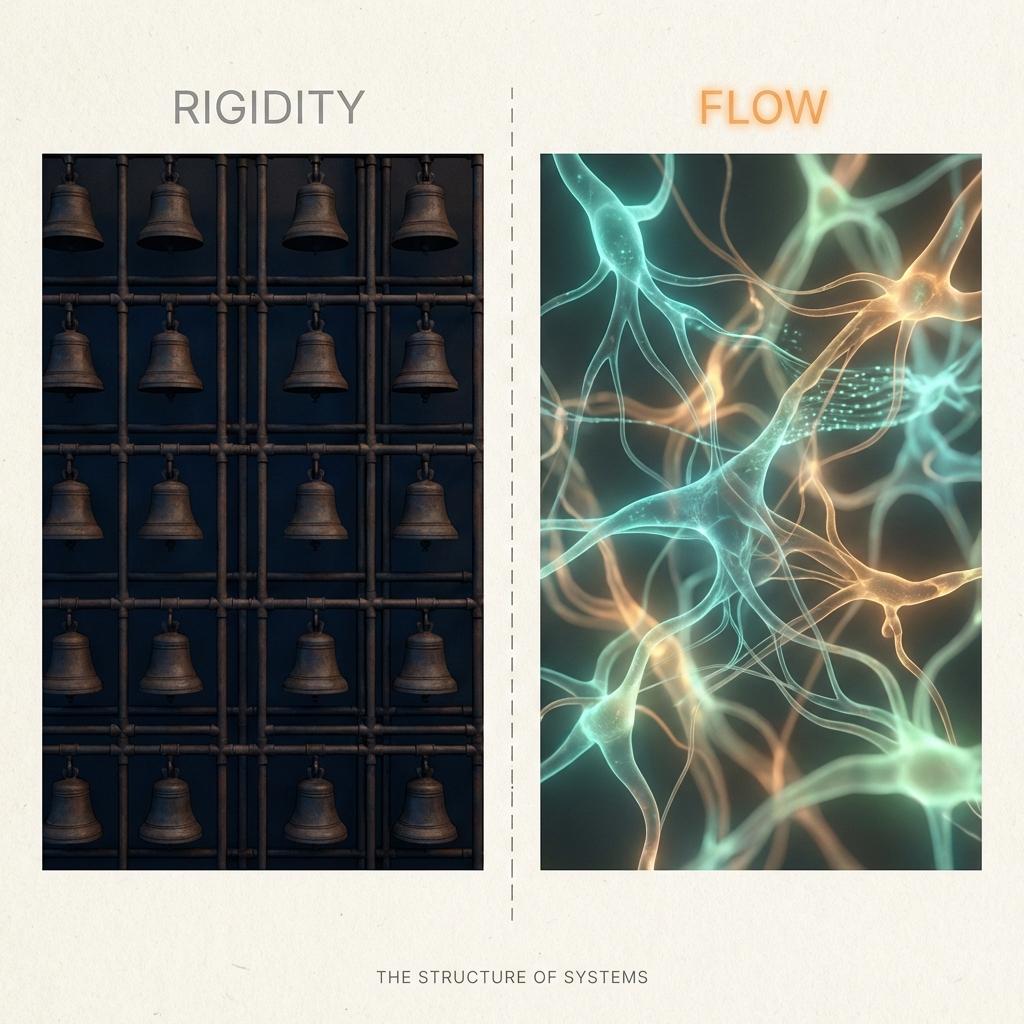
The School Factory Model
When I was homeschooled, people often asked me, "But how do you know what to learn if nobody tells you?" Looking back now as an adult, I realize the question itself is a symptom of the schooling mindset. We have been trained to believe that learning is something that must be done to us by an authority figure.
The public school model—the factory model—is built on three pillars that directly oppose natural human intelligence:
- Age Batching: Treating humans like batches of product that must move through a conveyor belt at the same speed, regardless of individual development.
- Bells and Abstraction: Forcing a child to stop thinking about history because a bell rang, then immediately switching to algebra. This destroys the ability to achieve "flow" or deep work.
- Compliance over Competence: Measuring a child's worth by how well they can follow instructions and recall pre-digested information, rather than how well they can solve real-world problems.
What Freedom Changes
When you remove the walls, the bells, and the permission slips, something remarkable happens: curiosity returns. Without the constant pressure of grades and the artificial constraints of a desk, children begin to engage with the world as it actually is.

In freedom-based learning, intelligence isn't measured by a test score. It's measured by adaptability, intrinsic motivation, and the ability to acquire new skills because they are relevant to a goal the learner actually cares about.
Unschooling Explained Plainly
There is a lot of mysticism around "unschooling," but at its core, it's just reality-based learning. It is the belief that children are born with the hardware to learn anything they need to succeed in their environment, provided they have access to resources, mentors, and the time to explore.
As I plan to homeschool my own children now, I'm not looking for better textbooks. I'm looking for better ways to give them the freedom I had—to spend four hours in a library, or a whole afternoon taking apart an engine, or a week researching a topic because it caught their interest.
Is This Right for Your Family?
Transitioning from the school model isn't just a change in schedule; it's a change in philosophy. It requires "decompressing" from the idea that a child is only learning if they are sitting quietly.
Reflection Questions
- Does your child seem more curious at home or at school?
- How much of what you learned in a classroom do you actually use today?
- What could your child accomplish with 30 extra hours of freedom every week?